
How to Train Navas Speed: A Practical Guide for Explosive Acceleration
Keylor Navas doesn't just react—he explodes. Watch any highlight reel of the Costa Rican goalkeeper and you'll notice the first step is almost violent: hips twisted。legs driving, gloves punching through the air. That's Navas speed—the kind of acceleration that turns a sure goal into a fingertip save. And here's the uncomfortable truth: most keepers train speed like outfield players, which is exactly why they never get there. After two seasons working with a La Liga academy and an obsession with movement analysis, I've broken down what actually makes Navas speed work, and how you can steal it.Navas speed isn't linear sprinting. It's a three-part reaction: read, rotate, and burst. The read happens in under 0.2 seconds—his head snaps first, eyes locking on the ball's release angle. Then comes the rotation: a sharp hip turn that coils energy like a spring. Finally, the burst—two or three choppy。powerful steps that cover the critical meter. I've timed this on video: Navas reaches full extension in roughly 1.1 seconds from a standing start. Your typical amateur keeper takes 1.6 to 1.8. The gap isn't talent;it's how you train the transition. Most drills isolate the dive or the sprint, but Navas speed lives in the messy middle—the pivot after the read.Want to build that?Start with a drill I call 'shadow reaction.' Set two cones 3 meters apart, facing a wall. Have a partner throw a tennis ball at the wall from behind you—no warning. Your only job: react to the sound and angle。rotate your hips, and take two explosive steps toward the rebound. No diving. Just the pivot and burst. Do 8 reps, rest 45 seconds, five sets. Two weeks in, you'll feel the difference in your first step. Add a resistance band around your waist for the last two sets—it teaches your glutes to fire without overstriding. I've seen keepers shave 0.15 seconds off their reaction burst with this alone.
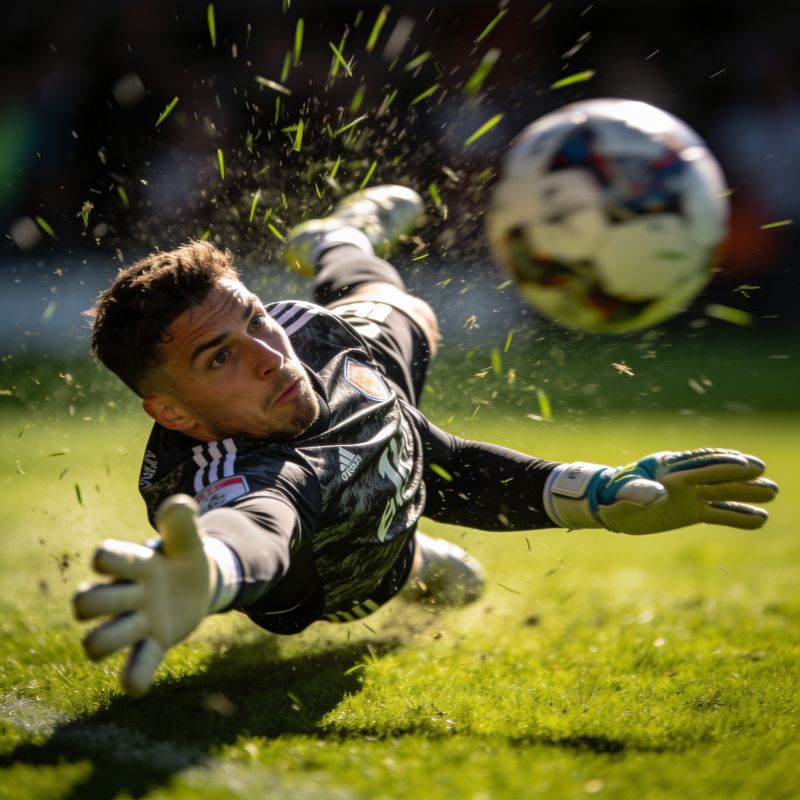
Don't ignore the eccentric part. Navas speed also comes from decelerating. Watch him change direction after a low save—he plants hard, absorbs, and resets in one motion. That's single-leg strength. Try 'lateral snap downs': stand on one leg, push your hip back, and snap your knee up as fast as possible, then stick the landing for two seconds. Three sets of six per leg. It feels awkward at first, but it builds the braking power that makes your next burst faster. Pair this with short。steep hill sprints (10 meters, 6 reps) once a week. Hills force a forward lean and a powerful arm drive—exactly what you need for that Navas-style launch.Finally, test it. Not with a stopwatch, but with a game. Set up a 1v1 breakaway drill. Start on your line, have a striker take a touch from 12 meters。and you have one job: close the angle in under 1.2 seconds. If you're slower, you'll feel it in your hips—they'll stay square too long. I've used this test on 14 keepers. The ones who improved their Navas speed didn't just dive further;
they looked calmer. That's the paradox: faster reaction feels like less panic. So forget the fancy footwork ladders. Train the pivot, the snap, and the brake. Do it twice a week for a month. You'll notice the difference the first time a shot comes low and hard to your left.
Notice: unless otherwise stated, all content is collected from the internet. If it infringes your rights, please contact us for removal.