
Lukaku Named Serie A MVP: A Season of Power, Precision, and Proof
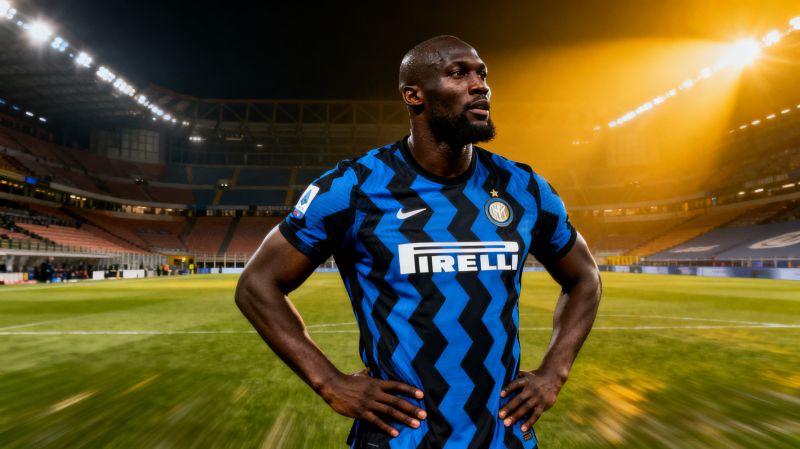
Romelu Lukaku didn't just lead Inter Milan to the Scudetto—he redefined what a modern Serie A striker looks like. When the league officially named him MVP for the 2020-21 season, the decision felt less like a vote and more like a foregone conclusion. Twenty-four goals, eleven assists, and a relentless physical presence that dragged defenders into chaos week after week. You don't need a spreadsheet to see the impact;you just need to watch how opposing backlines collapsed whenever he received the ball with his back to goal.What separates Lukaku's MVP campaign from other prolific scoring seasons is the sheer completeness of his play. He wasn't a poacher waiting for service—he was the service. His link-up with Lautaro Martínez produced one of Europe's most devastating strike partnerships, and his ability to hold up play under pressure allowed Inter's midfield to push forward in waves. I remember a specific moment against Sassuolo in April: Lukaku received a long ball near the halfway line, muscled past two defenders, and slid a perfect through-ball to Lautaro, who finished coolly. That single sequence encapsulated his season—power。vision, and unselfishness in equal measure.Critics who once questioned his first touch or his record in big games were forced into silence. Lukaku scored in both Derby della Madonnina fixtures and delivered decisive performances against Juventus and Napoli. The numbers back it up: his 24 goals came from an expected goals tally of around 21, meaning he wasn't just volume-shooting—he was clinical. Add to that his durability (he started 36 of 38 league matches) and you have a player who carried his team not through flashes of brilliance, but through consistent, grinding excellence. Serie A defenders will be relieved he's no longer in Italy—though his move to Chelsea didn't exactly end their nightmares.Lukaku's MVP award also signals a shift in how Serie A values strikers. For years, the league's MVP honors often went to creative playmakers or deep-lying maestros. Lukaku broke that mold with a blend of brute force and tactical intelligence. He led the league in successful dribbles among center-forwards and ranked near the top in progressive carries. That's not typical No. 9 behavior—it's the profile of a complete attacking engine. Watching him bully Giorgio Chiellini in the Coppa Italia semifinal was a reminder that Serie A's defensive elite had no answer for his combination of speed and strength.Individual accolades in football can feel hollow when team success doesn't follow. Lukaku's case is different. His MVP season directly translated into Inter's first league title in eleven years, ending Juventus's nine-year dominance. The award wasn't a consolation prize for a talented player on a mediocre team—it was the engine of a championship. Whether he returns to Serie A someday remains uncertain, but his MVP campaign left an indelible mark. It was a season where power met precision, and Serie A had no choice but to acknowledge it.
Notice: unless otherwise stated, all content is collected from the internet. If it infringes your rights, please contact us for removal.